Decolonize the Digital: Impulses for a Digital Civil Society
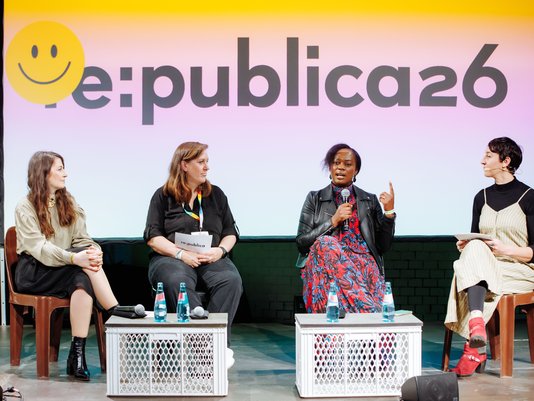
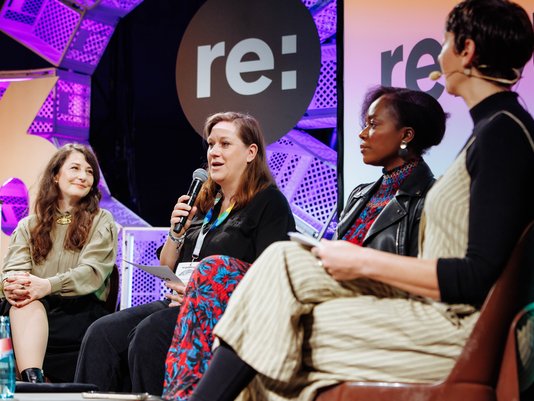
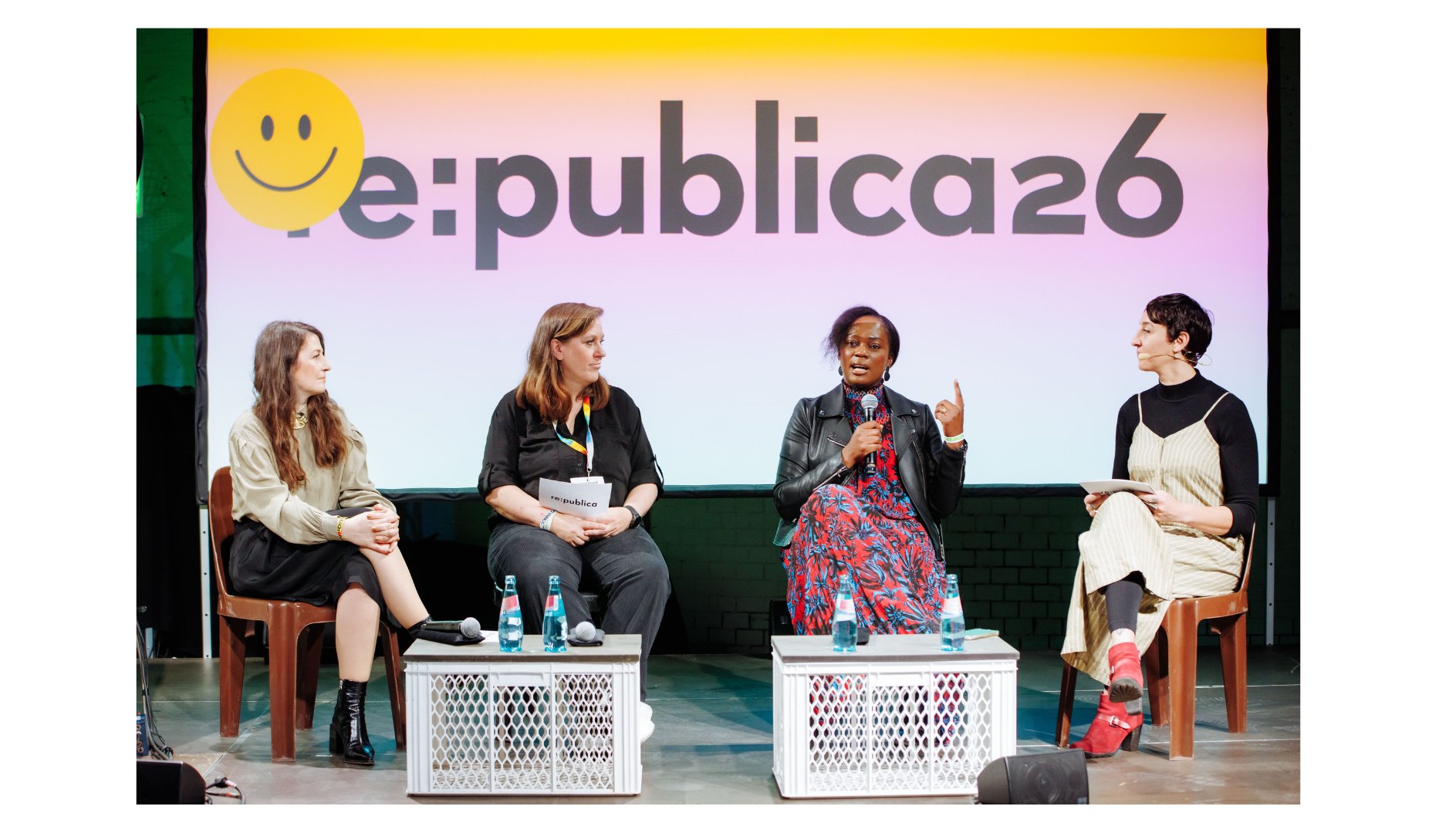
How can civil society actively shape digital transformation? This question was at the heart of the panel discussion “Decolonize the Digital: From Connectivity to Collective Solidarity” at re:publica26 on May 20, 2026.
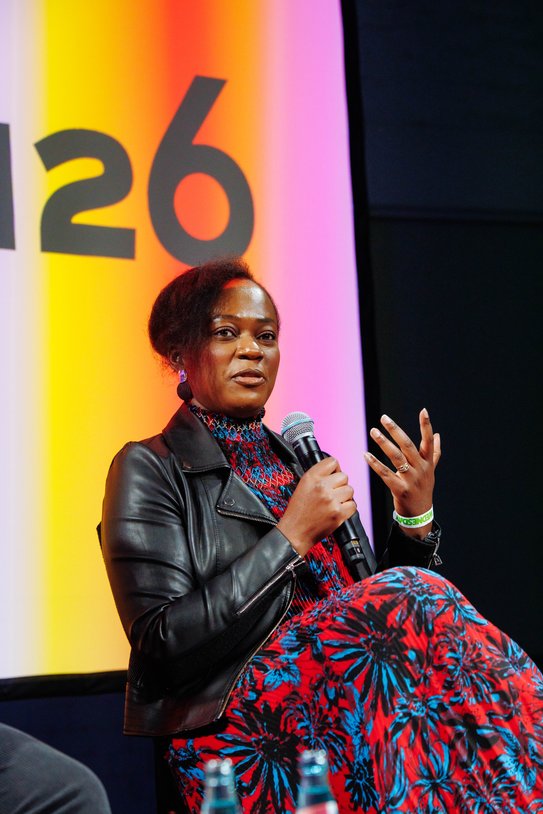
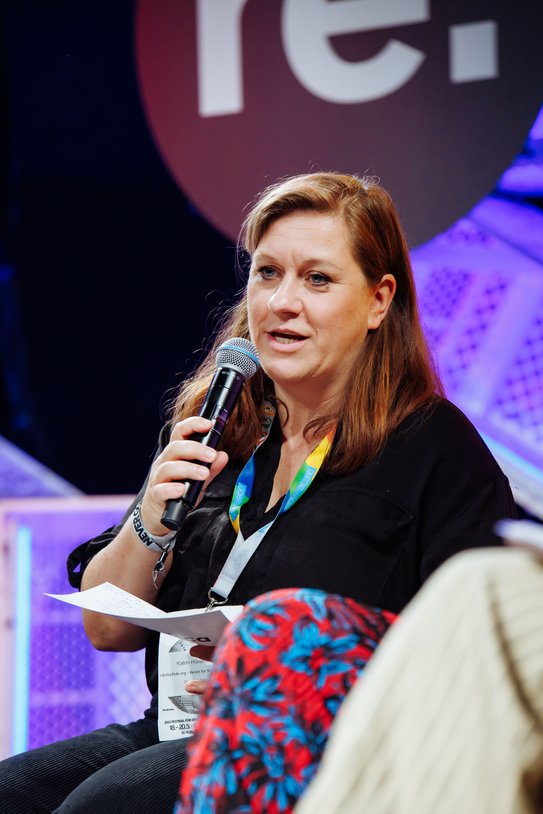
Together with Kave Bulambo (Black in Tech Berlin), Geraldine de Bastion (Global Innovation Gathering), and Katrin Hünemoerder (Mediale Pfade), Molly Stenzel (Berlin Global Village) discussed how digital spaces can be made more just, democratic, and community-oriented.
A key focus of the discussion was the introduction of the Digital Hub at Berlin Global Village – a space for shared digital infrastructure, knowledge exchange, and new forms of collaboration.
The Digital Hub at Berlin Global Village
“Global justice is not just a topic for us – it is lived infrastructure.” With this statement, Armin Massing of the Berlin Global Village opened the discussion on the future of digital collaboration in civil society.
With the planned Digital Hub, Berlin Global Village – a center that brings together around 60 development policy and migrant-diasporic organizations – is expanding its work with a new focus: digital transformation from a global justice perspective. The Digital Hub is intended not only as a physical space for collaboration, but also as a laboratory for digital sovereignty, shared infrastructure, and political participation.
At the center are questions that concern many civil society organizations: How can the digital capacities of organizations be strengthened? What alternatives exist to the dominant platforms of major technology corporations? And how can digital tools be designed in ways that foster democratic participation rather than reinforcing existing inequalities?
Digital Infrastructure Is a Question of Power
The discussion made clear that digital transformation extends far beyond technical innovation. Anyone using digital platforms is usually operating within systems that have been developed, financed, and controlled by others. For many civil society actors, this creates a structural dependency on technologies whose rules they have little ability to influence.
Kave Bulambo, founder of Black in Tech Berlin, pointed out that marginalized groups in the technology sector are often users or employees, but far too rarely owners, founders, or decision-makers. Genuine digital participation begins when people not only gain access but also have access to resources, financial means, and decision-making power.
The debate on digital sovereignty thus became a debate about the distribution of power. Who develops digital systems? Who benefits from them? And who has the opportunity to shape their future?
Participation Requires More Than Access
Another focus of the discussion was the question of what meaningful participation in digital spaces actually means. Katrin Hünemoerder of Mediale Pfade argued that digital education should be understood more strongly as democratic education. Access to technology alone is not enough if people do not understand how digital systems work, what interests lie behind platforms, or how decisions about data and content are made.
A central takeaway from the discussion was that participation does not begin with the use of a tool, but with the ability to help shape its rules. Transparency, shared decision-making, and the ability to critically question digital systems were identified as essential prerequisites for a democratic digital society.
Open Technologies as an Alternative
Geraldine de Bastion of Global Innovation Gathering highlighted initiatives around the world that are already building alternative digital infrastructures. Innovation hubs, community labs, and civil society networks are developing open-source software solutions, local data networks, and community-operated technologies designed around the needs of their users.
The discussion made clear that many solutions already exist. The challenge lies in sharing knowledge and strengthening networks.
Decolonization Does Not Begin at the Screen
One of the most powerful parts of the discussion focused on the colonial structures that continue to shape many digital technologies today. Kave Bulambo emphasized that the raw materials used in digital devices often come from regions that benefit little from the value created through their extraction. Artificial intelligence also relies on global supply chains – from resource extraction to data processing – that are frequently built on exploitative conditions.
For this reason, the question of a more just digital future cannot be limited to software and platforms alone. It also includes the conditions under which technologies are produced and the voices of those who have too rarely been included in conversations about the future of digitalization.
Shaping the Digital Future Together
Despite the challenges discussed, the overall perspective of the panel remained constructive. The conversation highlighted that civil society organizations around the world are already working on alternatives – particularly new forms of collaboration.
The Digital Hub at Berlin Global Village will bring these experiences together and create a space where digital infrastructure is understood as a shared responsibility. The central insight of the panel was clear: digital transformation is not only a technical challenge. It is a question of participation, responsibility, and democratic co-creation.
Watch the full panel discussion on YouTube: Recording available here.
Photo credits: Jan Michalko / re:publica / SenWeb.