“A Just Society Does Not Come into Being on Its Own”
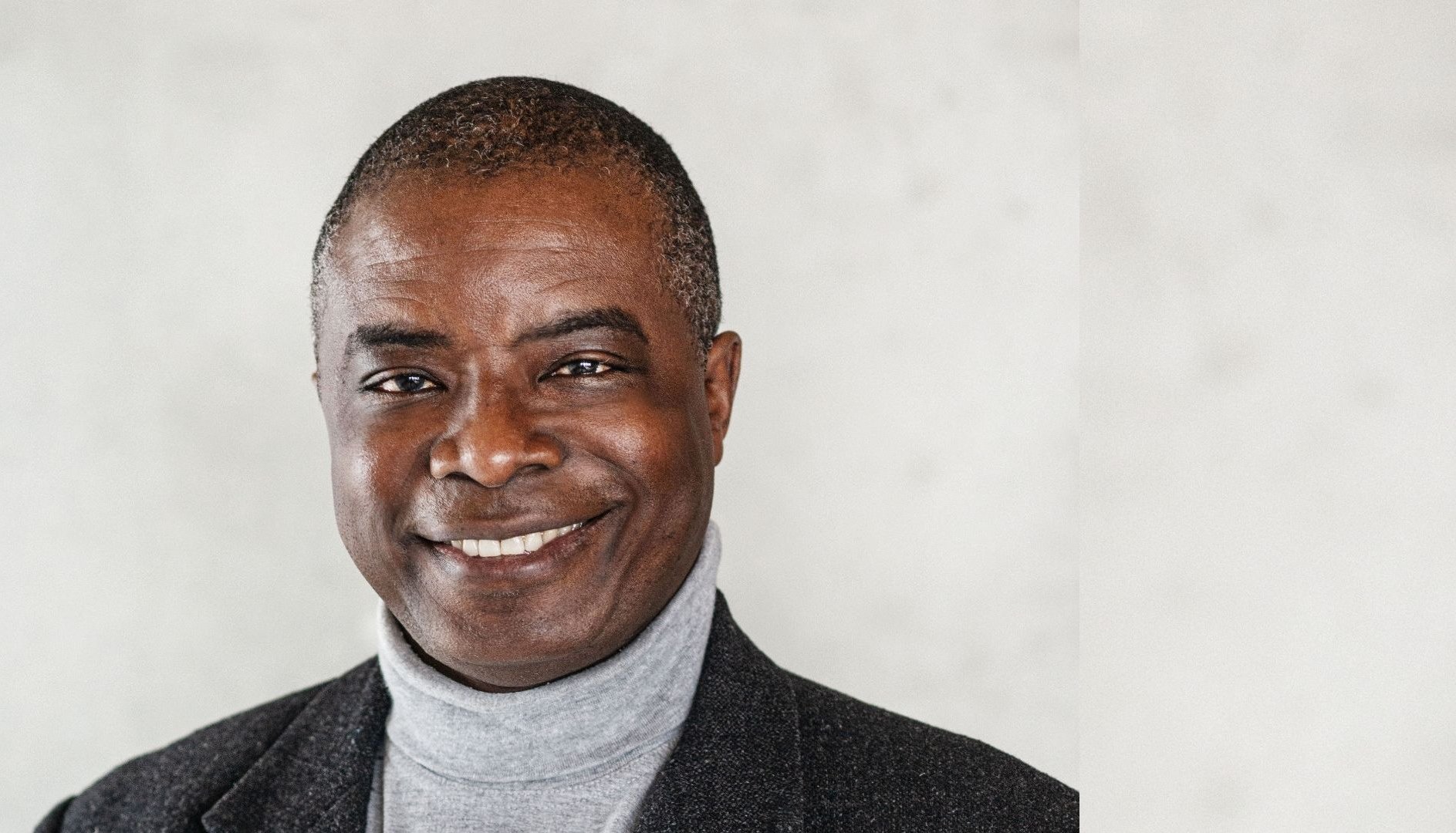
Interview with Akinola Famson on the International Day Against Racism
March 18, 2026, Interview by Michaela Zischek
What would you like to clearly name this year on the International Day Against Racism?
On the International Day Against Racism, I want to clearly name that anti-racism must not stop at symbolic gestures. And yet that is still often the case. What is needed is binding structural change and the consistent inclusion of the perspectives of those affected and of the Black community. Racism is not a marginal phenomenon. It shows up in institutions, in the education system, in the labor market, and in everyday life. It is particularly pronounced for people of African descent. They continue to be systematically disadvantaged and rendered invisible. That is why symbolic gestures alone are not enough; what is needed is binding structural change.
Where are political and social consequences or change especially urgent right now?
I see three areas in particular where change is urgently needed.
First, in the education system. We need anti-racist education, and it must be structurally embedded, from schools to teacher training. Teachers in particular need greater awareness-raising and decolonial education. At the same time, they must also be empowered to act as multipliers for anti-racist practice.
Second, change is needed in institutions and in public administration. What is necessary are binding anti-racist strategies, greater diversity in decision-making positions, and real access to participation for those affected. When we look at our institutions, we see that they are still marked by a severe lack of diversity at the decision-making level. This is exactly where change is needed. If we want to take international understanding seriously, then we need decision-making positions that reflect multiple perspectives.
Third, this is about migration and participation. People with different cultural and historical backgrounds must have equal access to political, social, and societal resources. Right now, however, in many places we are experiencing the opposite: for example, in cuts to asylum counseling services and German language courses. In this way, people are being excluded from participation. That is a major obstacle when we talk about a transformative society. It is regrettable that political decisions are currently cutting in the wrong places instead of enabling peaceful coexistence. Genuine peaceful coexistence can only emerge through real participation.
What responsibility do civil society actors carry in anti-racist work?
Associations and organizations engaged in anti-racist and decolonial work are already doing a great deal. But this work needs to be strengthened and structurally supported. They create spaces, make inequalities visible, and provide important impulses for political change. They bring their perspectives into committees and advisory processes and can thus help initiate political change. They translate experiences and perspectives for state institutions and make them more accessible. In doing so, they can have a significant impact.
At the same time, this responsibility must not be shifted onto civil society alone. They cannot fix it by themselves—anti-racist work is a task for society as a whole. Politics has a responsibility, institutions have a responsibility, and the majority society has a responsibility as well. All of them must support and carry this work in solidarity.
What responsibility do you see for civil society organizations that do not explicitly work on issues of migration, decolonization, and anti-racism?
They, too, can take on a central responsibility by showing solidarity with affected organizations and actors and by practicing civil courage. What we need are fewer lip-service statements that exist only on paper and more solidarity that is actually lived.
That is exactly what we would like to see. The louder we stand up together for these issues, the more anti-racist work can move forward. That is why we want to see more solidarity and stronger connections—especially from more established organizations.
What is also crucial here is reflecting on one’s own actions and one’s own privileges. That requires empathy and the willingness not only to name responsibility symbolically, but to take it on in practice as well.
Is there anything that has changed for the better over the past years or decades and can give us hope?
Compared with when I began this work, there has definitely been progress, even if much of it has continued to be slow and difficult. The voices of BIPOC and diaspora communities have become more politically audible. Institutional racism is no longer a taboo subject either; these issues are now being named more often.
I still remember that the way these issues were handled in the past, including in the context of the city’s security agencies, was very different. Back then, you could hardly even say terms like racial profiling out loud. And today there are more civil society networks and alliances actively working for change in this area. That, too, is progress. It is also encouraging to see that more young people are getting involved, even though I would still like to see more of that. When you take all these developments together, one thing also becomes clear: change is possible when it is demanded consistently. And that is exactly what gives me hope.
What message would you like to share from your role and political practice?
From my role as a community leader and specialist promoter for global solidarity, it is important to me to say this: global solidarity begins locally. It begins with ourselves—and whenever we shape it together and consistently.
In that context, I would like to see more trust in the expertise of affected communities and fewer empty declarations of intent. A just society does not come into being on its own. It has to be actively shaped, and that can only be done together and with clear political responsibility.
Akinola Famson is a board member of Afrika-Rat Berlin Brandenburg e.V., a One World Promoter for Global Solidarity, and a shareholder of Berlin Global Village.